
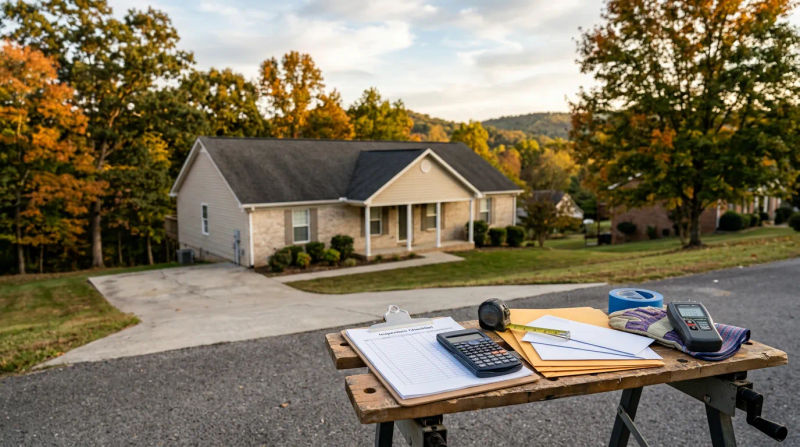
As a Senior Restoration Project Manager, I’ve spent more than a decade on the ground in the Tennessee Valley, often responding to emergencies in homes that have been sitting empty. A small, unnoticed leak can quickly escalate into a major mold and structural problem, especially for an absentee owner. If you own a vacant property in Soddy-Daisy, understanding the real costs of holding onto it is one of the most critical financial exercises you can undertake. Cost is a top concern, and my goal here is to provide transparent information to help you budget effectively and make the best decision for your situation.
Many homeowners are surprised by the cumulative expense of a vacant property. It’s not just the mortgage - it’s a collection of persistent costs that drain your resources month after month. Let's break down what you can realistically expect.
Average Costs in Soddy-Daisy
When we talk about the cost of a vacant home, we're primarily discussing holding costs. These are the non-negotiable monthly expenses you pay simply to maintain ownership and keep the property from falling into disrepair or violating local codes. For an absentee owner selling house remotely, these costs are the primary factor when deciding whether to sell now or wait.
Here’s a realistic breakdown of typical Soddy-Daisy TN vacant home holding costs for a standard single-family home:
- Utilities (Minimal Use): Even if no one is living there, you need to keep utilities on. Electricity is required to run the HVAC system (to prevent mold), power a security system, and provide light for any showings or inspections. Water should remain on to keep pipes pressurized and prevent seals from drying out. Expect to pay $75 - $200 per month for these ghost utilities, depending on the size of the home and the season.
- Vacant Home Insurance: Standard homeowner's insurance policies often don't cover properties that are unoccupied for more than 30-60 days. You'll need a specific vacant home policy, which is more expensive because the risk of vandalism, theft, and undiscovered damage (like water leaks) is much higher. This can cost 1.5 to 2 times your normal premium, averaging $150 - $250 per month.
- Property Taxes: Hamilton County property taxes are a significant expense that you pay regardless of occupancy. For a home valued at $350,000, your annual tax bill could be around $3,000, which breaks down to $250 per month.
- Lawn Care & Exterior Maintenance: An overgrown lawn is a clear sign of a vacant home, inviting unwanted attention and potential code violations from the city. Basic mowing, trimming, and leaf removal are essential. Budget $100 - $200 per month, with costs potentially higher in the peak growing season.
- Pest Control & Security: Empty homes are attractive to pests and vandals. A quarterly pest control service and a basic security monitoring system are wise investments. This can add another $50 - $100 per month to your expenses.
Total Estimated Monthly Holding Cost: $625 - $1,000+
When you add it all up, you could easily be spending nearly $1,000 every month. If the property takes six months to sell on the traditional market, that’s $6,000 gone before you even factor in repairs or realtor commissions.
Factors That Affect Price
The holding costs above are just one part of the financial equation. Several other factors influence both your ongoing expenses and the ultimate price you get when you decide to sell vacant house Soddy-Daisy.
- Property Condition: This is the single most significant variable. A home with a newer roof, updated HVAC, and modern finishes will have lower holding costs and command a higher price. Conversely, a property needing significant repairs - leaky roof, failing plumbing, outdated kitchen - not only costs more to maintain but will also see its value reduced significantly.
- Building Era & Style: Many homes in the Soddy-Daisy area were built in the 1990s and 2000s. These larger, two-story homes with complex rooflines and attached garages have specific considerations. Their size means higher utility bills to heat and cool, even minimally. Original systems from this era, like HVAC units, water heaters, and roofing, are likely at or past their expected service life. A buyer will factor the cost of these imminent replacements into their offer, often reducing it by tens of thousands of dollars.
- Time on Market: The longer your house sits, the more you pay in holding costs. Market conditions, pricing strategy, and the home's condition all influence how long it takes to find a buyer.
- Seasonal Factors: As October arrives and temperatures cool, the risks change. The focus shifts from controlling humidity to preventing frozen pipes. You must ensure the heat is set to at least 55 degrees, which increases your utility bills. This time of year is a smart checkpoint for absentee owners to weigh the rising costs of winter against a fast, certain sale.
How to Get the Best Value
For an absentee owner, maximizing value is about minimizing expenses and uncertainty. You don't have the luxury of checking on the property daily, so your strategy needs to be proactive.
- Perform Regular Property Checks: Have a trusted neighbor, property manager, or professional service walk through the home at least twice a month. Our technicians often see how a simple check could have caught a running toilet or a small leak under a sink before it caused thousands in water damage and mold growth. This is especially true in Soddy-Daisy’s humid climate, where mold can take hold quickly in a vacant home.
- Prioritize Critical Maintenance: Don't worry about major cosmetic upgrades. Focus your resources on preventing catastrophic failures. Repair any roof leaks, address plumbing issues, and ensure the HVAC is functional. Keep the lawn mowed and the exterior tidy.
- Calculate Your True Costs vs. a Cash Offer: This is the most important step. Calculate your total monthly holding costs. Then, estimate how many months it might take to sell on the traditional market (ask a realtor for a realistic timeline). Add in the cost of any necessary repairs and a 6% realtor commission. Now, compare that final net number to an as-is cash offer for vacant property. An as-is offer provides certainty. There are no repair negotiations, no showings, no commissions, and you stop paying holding costs immediately. You get a clean break and cash in hand, often in just a couple of weeks.
Questions to Ask Your Contractor or Buyer
Whether you’re hiring someone to maintain the property or evaluating a cash buyer, asking the right questions is key to protecting your investment.
When evaluating an as-is cash buyer:
- Can you provide proof of funds? This confirms they have the capital to close without relying on a slow bank loan.
- What does your inspection process look like? A professional buyer will have a quick, straightforward inspection and should be able to make a firm offer without extensive contingencies.
- Are there any fees or commissions? A direct-to-buyer sale should have zero commissions. Ask for a settlement statement to see all costs upfront.
- How quickly can you close? The primary benefit of a cash sale is speed. A reputable buyer should be able to close in as little as 1-2 weeks.
As an absentee owner, time and certainty are your most valuable assets. Holding onto a vacant home is a significant financial gamble, with costs that accumulate quickly and unpredictably. By understanding the real expenses and comparing them to a firm, fast alternative, you can make an informed decision that best protects your financial well-being.
For a personalized, no-obligation as-is cash offer for vacant property in the Soddy-Daisy area, contact CFM Restoration. We can provide a clear, written offer to help you compare your options and make the right choice.